

Imeka: One Strategy for Patents, FDA Clearance and Deals
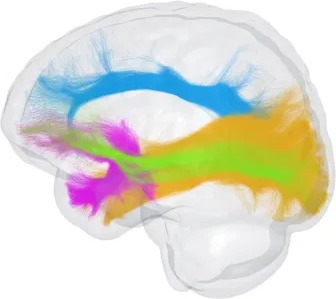
Most medical technology companies keep three files: one at the Patent Office, one at FDA, and a drawer of contracts. Usually three sets of advisors tend them, and the three rarely read each other's work. For Imeka, whose ANDI software turns a diffusion MRI scan into a map of the brain's white matter, we brought in the regulatory consultants at EVERSANA so that all three followed one strategy. This is how it went.
At a Glance
- Client: Imeka Solutions, Inc., of Sherbrooke, Quebec
- Product: ANDI, software that uses artificial intelligence to map and measure the brain's white matter
- Patents: Two U.S. patents granted in March 2026, with more applications pending
- FDA: Three 510(k) clearances, in 2023, 2025 and 2026
- Agreements: Clinical trial imaging agreements with INmune Bio and Atara Biotherapeutics
- Our team: Kevin Buckley and Steven Stupp
Patents First
What a company tells FDA does not stay with FDA. Every 510(k) clearance comes with a public summary, and a public summary is prior art like any other. So the patent applications went first. In 2021 we filed on the methods under the hood, including the cleanup of tractography results with a neural network and the white matter biomarkers of free water, fiber density and demyelination. That was well before the first 510(k) summary became public in 2023, so nothing Imeka told FDA could be cited against its own patents.
Two Files That Disagree on Purpose
A 510(k) is won by claiming no more than the predicate allows. ANDI was therefore cleared as a measurement tool that offers adjunctive information, and the submission says in plain words that it does not diagnose anything. A patent application has the opposite temperament. It is supposed to claim everything the inventors have earned, and Imeka's patents reach the clinical uses where the technology is headed.
Written by teams that never talk, those two files can contradict each other in ways that hurt. Written by teams that do, the modesty of one and the ambition of the other are simply two halves of a plan.
Clearances That Compound
The first clearance was the hard one. After that, ANDI became the predicate for ANDI 2.0, and ANDI 2.2 followed as a Special 510(k), cleared in 29 days. A company that is its own predicate sets its own pace.
It also leaves a competitor with a puzzle. Anyone who would like to borrow ANDI as a predicate must show the same technological characteristics, which is an awkward thing to prove about patented methods. Our answer on choosing a predicate device explains why.
Contracts on the Same Plan
Imeka's technology reaches patients through agreements as much as through clearances. We handled its agreements with drug developers INmune Bio and Atara Biotherapeutics, which have used Imeka's imaging biomarkers in clinical trials. That technology transactions work was drafted with the patents and the clearances on the table. Imeka keeps its improvements and its know-how, a partner licenses no more than it needs, and nobody promises more about the software than FDA has cleared.
Three Files, One Plan
| File | What it says | How it helps the other two |
|---|---|---|
| Patents | As much as the inventors have earned, including the clinical uses ahead | Filed before the FDA summaries became public; makes ANDI a hard predicate to borrow |
| FDA 510(k) | No more than the predicate allows: measurement, not diagnosis | Each clearance becomes the predicate for the next; sets the limit on what the contracts may promise |
| Agreements | What each partner may use, and what stays with Imeka | Keep improvements and know-how in the patent portfolio; keep product claims inside the clearance |
The Record
- 2021 Patent applications filed on tractography processing (June) and white matter biomarkers (October). INmune Bio partnership announced (July).
- 2022 Atara Biotherapeutics collaboration announced (January).
- 2023 ANDI cleared by FDA (K230913, July).
- 2025 ANDI 2.0 cleared, with ANDI as its predicate (K252298, October).
- 2026 U.S. Patents 12,573,030 and 12,573,498 granted (March). ANDI 2.2 cleared as a Special 510(k) in 29 days (K261405, May).
What This Means for Your Company
- File before you submit. Your own 510(k) summary can be cited against your own patent application.
- Let the two files differ. Claim narrowly at FDA and broadly at the Patent Office, and keep the patent and regulatory teams talking so the difference is deliberate.
- Become your own predicate. The second and third clearances come faster, and patents make the first one harder for others to lean on.
- Read the contracts against both. A partner should not walk off with your improvements, or say more about your product than FDA has cleared.
Who Did the Work
Kevin Buckley and Steven Stupp handled the patents, and Kevin handled the INmune Bio and Atara agreements. For the FDA side, Kevin brought in EVERSANA, a regulatory consulting firm that has worked successfully with many Torrey Pines Law Group clients over the years, and he worked closely with its team on the 510(k) submissions so that the patent strategy and the regulatory strategy stayed intertwined. It is one of many long professional relationships the firm keeps for the benefit of its clients. If your product has to get past two agencies and a counterparty or two, we would be glad to hear about it.
More results are on our Recent Successes page, and the patents are on our representative list.